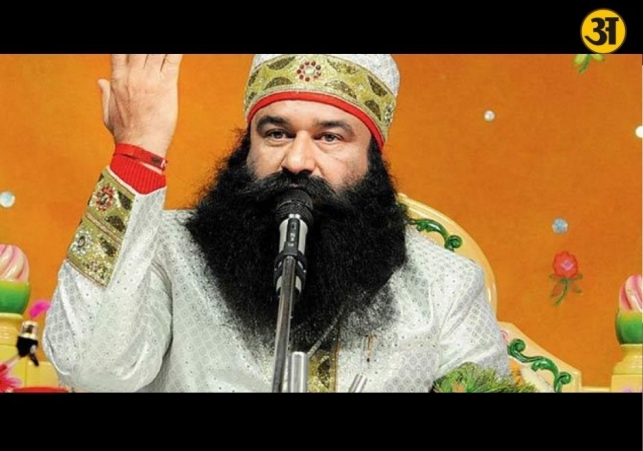
Dera chief cleared in 2002 killing of journalist Ram Chander Chhatrapati
Punjab and Haryana high court acquits Gurmeet Ram Rahim in journalist murder case
The Punjab and Haryana High Court has acquitted Dera Sacha Sauda chief Gurmeet Ram Rahim in the 2002 murder case of journalist Ram Chander Chhatrapati. The decision came on Saturday when the court set aside the earlier conviction and life sentence that had been awarded to him by a special CBI court in 2019.
The ruling was delivered by a bench led by Chief Justice Sheel Nagu and Justice Vikram Aggarwal. While the court cleared Ram Rahim of the charges, it upheld the conviction of at least two other accused persons connected to the case.
The detailed judgment explaining the court’s reasoning is expected to be released later. For now, the court has announced its decision in open court, bringing a major development in a case that has been closely followed for more than two decades.
Despite this acquittal, Ram Rahim will remain in prison because he is already serving a 20-year sentence in two rape cases. He is currently lodged in Sunaria jail in Rohtak district of Haryana.
Background of the 2002 murder case
Journalist Ram Chander Chhatrapati was the editor of a local newspaper in Sirsa, Haryana. On October 24, 2002, he was shot at point-blank range outside his residence by unidentified attackers. The attack happened months after his newspaper published a controversial anonymous letter.
The letter claimed that women who joined the Dera Sacha Sauda as sadhvis were being sexually abused and raped by the dera chief. The publication of this letter created major controversy and brought serious allegations against Gurmeet Ram Rahim.
Soon after the journalist was attacked, he was taken to hospital but later died from his injuries. The incident shocked the region and raised serious concerns about press freedom and the safety of journalists.
The case was later investigated by the Central Bureau of Investigation (CBI). After years of investigation and court proceedings, a special CBI court in Panchkula delivered its judgment on January 17, 2019.
The trial court convicted Gurmeet Ram Rahim and three other accused in connection with the murder. All four were sentenced to life imprisonment and ordered to pay a fine of ₹50,000 each.
Following the conviction, Ram Rahim and the other accused challenged the verdict in the Punjab and Haryana High Court. They argued that they had been falsely implicated in the case and sought to overturn the trial court’s judgment.
ALSO READ: Jaishankar speaks with Iran and Oman as India pushes for diplomacy in Middle East crisis
ALSO READ: Iran warns US after warship Iris Dena sunk in Indian Ocean, 87 killed
High court sets aside conviction
After hearing the appeals, the Punjab and Haryana High Court has now decided to acquit Gurmeet Ram Rahim in the case. The court ruled that his conviction could not be sustained and therefore set aside the life sentence awarded earlier.
However, the court did not give relief to all the accused. It upheld the conviction of at least two other individuals who were involved in the case.
The complete judgment is expected to provide detailed reasons for the court’s decision, including its examination of evidence and legal arguments presented during the hearings.
Although Ram Rahim has been cleared in this particular case, his legal troubles are far from over. The self-styled godman is already serving a 20-year prison sentence after being convicted in 2017 in two rape cases involving women followers.
Those convictions led to widespread violence in Haryana and nearby areas. On August 25, 2017, after the special CBI court found Ram Rahim guilty in the rape cases, clashes broke out between his supporters and security forces in Panchkula and other towns.
The violence resulted in the deaths of more than 40 people and injuries to dozens of others. The situation forced authorities to impose heavy security measures in several parts of the state.
Ram Rahim has also faced other criminal cases over the years. In May 2024, the Punjab and Haryana High Court acquitted him in another high-profile case related to the 2002 murder of former Dera manager Ranjit Singh.
In addition, he has been named in several First Information Reports connected to the 2015 sacrilege incidents in Punjab. Investigations into those cases are still ongoing.
Earlier this year, Ram Rahim was released from prison temporarily after being granted a 40-day parole in January. His parole releases have often been surrounded by controversy, with opposition parties and activists questioning the timing of these temporary freedoms.
Critics have argued that such releases raise concerns about security and political influence. However, authorities have maintained that the paroles were granted according to legal rules.
The latest acquittal in the journalist murder case is expected to draw strong reactions from various groups, including supporters of the Dera Sacha Sauda as well as critics who have long demanded strict action in the case.
The final detailed judgment from the High Court will likely clarify the legal reasoning behind the decision and may influence future proceedings related to the case.
For now, the ruling marks another significant chapter in the long series of legal battles involving Gurmeet Ram Rahim, one of the most controversial religious figures in recent Indian history.
Related News